
Intro
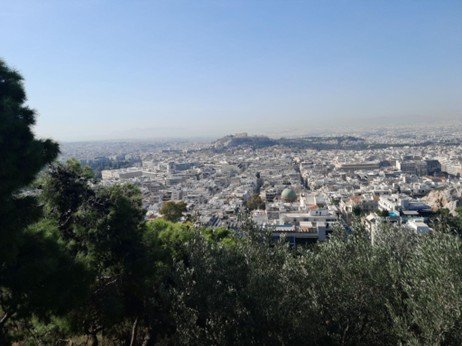
Athens is the capital and largest city of Greece. A significant coastal urban area in the Mediterranean, Athens is also the capital of the Attica region and is the southernmost capital on the European mainland. With its urban area’s population numbering over 3.6 million, it is the eighth-largest urban area in the European Union.
Athens is one of the world’s oldest cities, with its recorded history spanning over 3,400 years and its earliest human presence beginning somewhere between the 11th and 7th millennia BCE. According to Greek mythology the city was named after Athena, the ancient Greek goddess of wisdom, but modern scholars generally agree that the goddess took her name after the city. Classical Athens was one of the most powerful city-states in ancient Greece. It was a center for democracy, the arts, education and philosophy and was highly influential throughout the European continent, particularly in Ancient Rome. For this reason it is often regarded as the cradle of Western civilisation and the birthplace of democracy in its own right independently from the rest of Greece.
In modern times Athens is a large cosmopolitan metropolis and central to economic, financial, industrial, maritime, political and cultural life in Greece. It is one of the biggest economic centers in Southeast Europe. It also has a large financial sector, and its port Piraeus is both the second-busiest passenger port in Europe and the thirteenth-largest container port in the world.
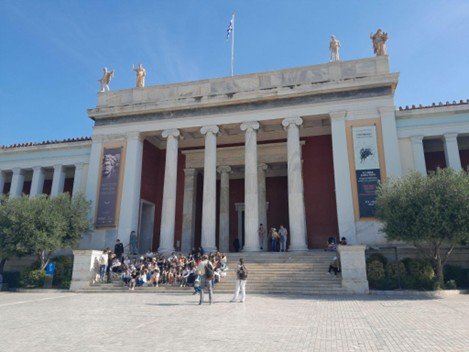
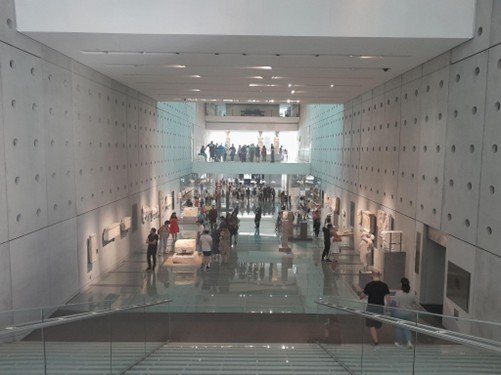
The heritage of the Classical Era is still evident in the city, represented by ancient monuments, and works of art, the most famous of all being the Parthenon, considered a key landmark of early Western culture. The city also retains Roman, Byzantine and a smaller number of Ottoman monuments, while its historical urban core features elements of continuity through its millennia of history. Athens is also home to several museums and cultural institutions, such as the National Archeological Museum, featuring the world’s largest collection of ancient Greek antiquities, the Acropolis Museum, the Museum of Cycladic Art, the Benaki Museum and the Byzantine and Christian Museum. Athens was the host city of the first modern-day Olympic Games in 1896, and 108 years later it hosted the 2004 Summer Olympics, making it one of five cities to have hosted the Summer Olympics on multiple occasions.
Unesco
Athens is the capital and largest city of Greece. A significant coastal urban area in the Mediterranean, Athens is also the capital of the Attica region and is the southernmost capital on the European mainland. With its urban area’s population numbering over 3.6 million, it is the eighth-largest urban area in the European Union.
Athens is one of the world’s oldest cities, with its recorded history spanning over 3,400 years and its earliest human presence beginning somewhere between the 11th and 7th millennia BCE. According to Greek mythology the city was named after Athena, the ancient Greek goddess of wisdom, but modern scholars generally agree that the goddess took her name after the city. Classical Athens was one of the most powerful city-states in ancient Greece. It was a center for democracy, the arts, education and philosophy and was highly influential throughout the European continent, particularly in Ancient Rome. For this reason it is often regarded as the cradle of Western civilisation and the birthplace of democracy in its own right independently from the rest of Greece.
In modern times Athens is a large cosmopolitan metropolis and central to economic, financial, industrial, maritime, political and cultural life in Greece. It is one of the biggest economic centers in Southeast Europe. It also has a large financial sector, and its port Piraeus is both the second-busiest passenger port in Europe and the thirteenth-largest container port in the world.
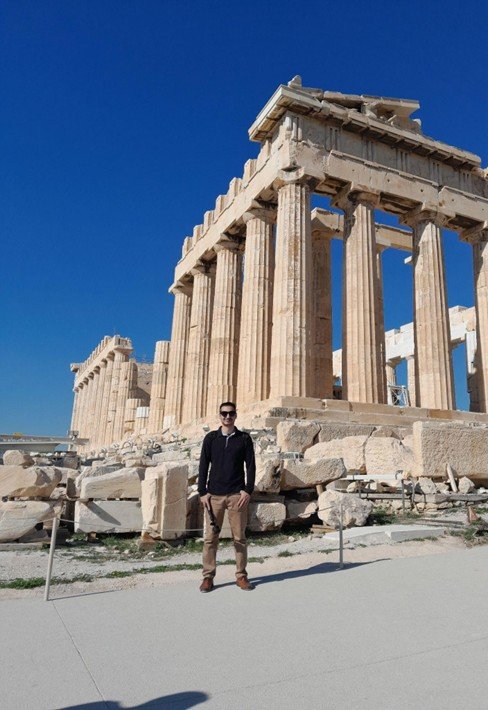
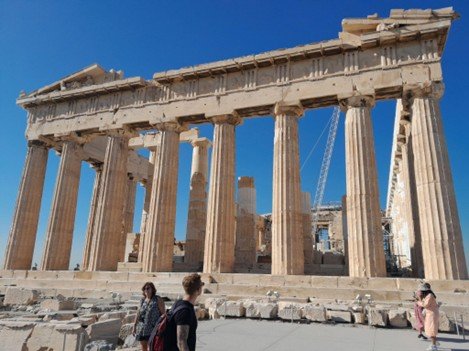
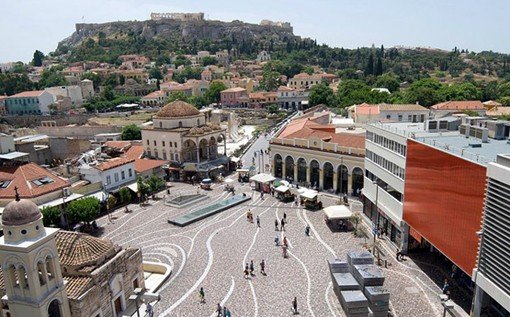
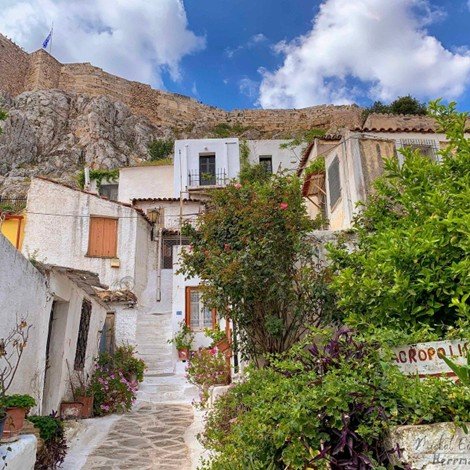
The Acropolis of Athens is an ancient citadel located on a rocky outcrop above the city of Athens, Greece, and contains the remains of several ancient buildings of great architectural and historical significance, the most famous being the Parthenon. During ancient times the Acropolis of Athens was also more properly known as Cecropia, after the legendary serpent-man Cecrops, the supposed first Athenian king.
While there is evidence that the hill was inhabited as early as the 4th millennium BC, it was Pericles (c. 495–429 BC) in the fifth century BC who coordinated the construction of the buildings whose present remains are the site’s most important ones, including the Parthenon, the Propylaea, the Erechtheion and the Temple of Athena Nike. The Parthenon and the other buildings were seriously damaged during the 1687 siege by the Venetians during the Morean War when gunpowder being stored by the then Turkish rulers in the Parthenon was hit by a Venetian bombardment and exploded.
Daphni is an eleventh-century Byzantine monastery eleven kilometers northwest of central Athens in the suburb of Chaidari. It is situated near the forest of the same name, on the Sacred Way that led to Eleusis. The Daphni Monastery, along with the famous monasteries of Hosios Loukas near Delphi and Nea Moni on the island of Chios, are designated UNESCO World Heritage Sites for their significant historical and architectural value. These monasteries are famed as masterpieces of middle Byzantine architecture, and are especially noted for their sumptuous interior gold-ground mosaics.

Comments